

Wholesale Blank Apparel Logistics for Midwest Resellers
Our Chicago warehouse exists for a practical reason: a reseller in Ohio, Michigan, or Missouri should not have to wait on a shipment that crosses three time zones before it reaches a print shop or a packing table. Wholesale blank apparel runs on thin margins and fast turns, and every day a box spends in transit is a day your listing sits unsold, your press sits idle, or your customer refreshes a tracking page that has not moved.
We supply blank apparel to resellers, print shops, brands, and businesses across the region without the gatekeeping that makes buying blanks feel like a negotiation with a distributor who does not want your order. No minimums on blanks. Tiered wholesale pricing that starts at five units. A warehouse in the middle of the country rather than on one of its edges. Below is how the logistics side actually works, and what to plan for if you are moving garment inventory through the Midwest.
Why Does Warehouse Location Matter So Much for Blank Apparel?
A blank is a low-value, high-volume item. Freight cost and transit time are baked into the price you paid, even when the shipping line says free. When the wholesale supplier ships from Chicago, most Midwest metros sit inside a short ground haul rather than at the end of a long one, which affects three things that matter to a reseller.
- Restock speed. A short lane means reordering does not stall a live listing for a week.
- Fewer handoffs. Every transfer between a regional hub and a local terminal is another chance for a split shipment or a damaged carton.
- Predictability. When transit is short, a missed delivery costs you days, not a week and a half.
That does not mean blanks only move regionally. Nationwide delivery is standard, and orders travel to both coasts and everywhere between. The difference is that a Chicago origin tends to serve Midwest addresses on a tighter loop, which is the loop most independent sellers and decorators actually live in.
How Do No-Minimum Ordering and Tiered Pricing From 5 Units Work?
The old wholesale model asked small buyers to commit to a case before they could see a price worth having. We do not require a minimum on blanks, so a single heavyweight tee or a sample kit is a legitimate order. Tiered wholesale pricing begins at five units, and the per-unit cost improves as the order grows. That structure gives you room to test before you commit capital.
The practical approach is to buy a small quantity first, put the garment in your customer's hands or on your own body, and evaluate how it prints, washes, and sells. Once a style proves out, reorder at a volume that reaches the next price break. If you skip that step, you end up with fifty pieces of a fit nobody wanted.
|
Order size |
Typical use |
What to confirm |
|---|---|---|
|
Single units, no minimum |
Sampling a fit, fabric weight, or color |
Whether a sample kit is the cheaper route |
|
Five units and up |
Selling, printing, or stocking core sizes |
Current tier breaks and how they scale |
|
Around 50 units and up |
Private label and decorated programs |
Artwork specs, label needs, and lead times |

What Should Midwest Resellers Keep on the Shelf?
Garment inventory is a cash conversion problem as much as a storage problem. The blanks that move fastest for most sellers are the ones with year-round demand and predictable sizing: heavyweight French terry tees, performance tees, hoodies, fleece, and all-season quarter-zip pullovers. Those categories cover screen printing customers, embroidery accounts, and direct-to-consumer sellers at the same time.
Depth beats breadth in the early stages. Carrying a narrow set of styles in a full size run in neutral colors keeps you from turning down orders over a missing medium while your rack fills up with odd sizes that never sell. Add accent colors and fashion cuts once you can see which listings actually convert, and let sell-through data rather than guesswork decide what gets a second shelf.
How Should You Handle Restocks and Garment Inventory Management?
Restocking is where most small apparel operations lose money, usually because they reorder the wrong axis. Track sell-through by size and color, not just by style. A shirt that reports healthy overall sales can still be bleeding, because the smalls and mediums are turning while the double extras sit untouched.
- Set a reorder point for every core size, using your selling rate plus the supplier's lead time and a buffer for your busiest week.
- Consolidate replenishment into fewer, larger orders so you reach better price tiers and lower your shipping cost per unit.
- Ask how the supplier handles stock visibility and backorders, so you find out a size is out before your customer does.
- Buy ahead of seasonal demand. Fleece and quarter-zips move on a different calendar than tees, and waiting until the first cold week puts you at the back of the line.
Keep a working buffer of your best sellers if you sell to print shops or businesses on a schedule, because those buyers do not accept a two-week gap while you wait on freight.
Can You Add Decoration or Private Label to Blanks?
Blanks are the base layer, and decorating them turns inventory into finished product with a higher margin. Screen printing, embroidery, emboss, and DTF or DTG printing are all available, which means a reseller can quote a printed or stitched job without running the work in-house or coordinating a second vendor. Private label programs start around 50 units, so a small brand can move from plain stock into its own labeled garment without a factory-scale commitment. Decoration timelines run on their own schedule, separate from how fast blanks leave the warehouse, so build both into your delivery promise.
What Should You Ask a Wholesale Supplier Before Committing?
A short conversation before your first order saves a season of frustration. Terms vary across the industry, and the details that shape your margins are rarely printed in bold on a product page.
- What is the daily order cut-off, and when does an order placed after that point ship?
- What is the current free shipping threshold, and does it apply per order or per shipment?
- Can sizes and colors be combined to reach a pricing tier, or does each run count separately?
- How are backorders and out-of-stock sizes communicated?
- What are the decoration options, minimums, and lead times?
- Do trade or partner programs exist for print shops and repeat decorators?
We answer those questions with actual numbers when you ask, because a supplier who hedges on cut-off times and thresholds is telling you something about how the rest of the relationship will go.

Do Midwest Orders Ship Differently Than Nationwide Orders?
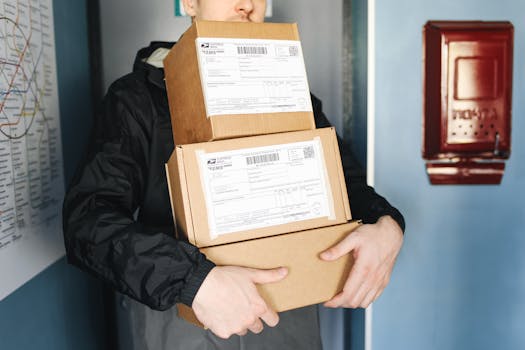
The mechanics are the same. Parcel for cartons, freight for pallet-scale restocks. What changes is the math. A Midwest destination usually gets a shorter ground transit window from Chicago, which reduces the amount of safety stock you need on hand and shortens the gap between a sale and a reorder. Nationwide addresses still get served, but plan for a longer window and confirm carrier options before you promise a customer a date.
If you are moving serious volume, ask about freight handling requirements up front, including whether your delivery location needs a dock or a liftgate. Building that detail into the first order beats discovering it when a pallet arrives at a building with no loading bay.
Frequently Asked Questions
Is there a minimum order for wholesale blank apparel?
We do not require a minimum on blanks, so a single tee or a small sample pack is a valid order. Tiered wholesale pricing begins at five units, which means the per-unit cost improves once your order crosses that line. If you are testing a new style or color for an online listing, start small, check the fabric and fit, then reorder at a tier break.
How fast do Midwest orders usually arrive?
Transit depends on the carrier, the service level, and how close you are to Chicago, so ask for an estimate rather than assuming a fixed number. Ground service from a Chicago warehouse generally reaches Midwest addresses on a short lane because the freight is not crossing the country first. Confirm the daily order cut-off so you know when an order leaves the building.
Can I combine sizes and colors to reach a pricing tier?
Ask your supplier directly, because combining rules differ from one wholesale supplier to the next. Some count total units across a style, while others treat each size run separately. Knowing the rule before you build an order can move you into a better price break without ordering more product than you can realistically sell. Build the order, then confirm the tier.
What kinds of decoration can be added to blank apparel?
Screen printing, embroidery, emboss, and DTF or DTG printing are all available as decoration options, which lets a reseller sell finished goods instead of plain stock. Private label programs start around 50 units, so a small brand can move from blanks into its own labeled product without a factory-scale commitment. Decoration lead times are separate from blank shipping times, so plan both.
Do I need my own warehouse to resell blanks in the Midwest?
No. Plenty of resellers work from a garage, a spare room, or a small unit and rely on the supplier's warehouse as their upstream stock. The real constraint is turnaround. Keep enough depth in your best-selling sizes so a retail or print shop order does not sit waiting on a restock, and track sell-through by size rather than by style alone.